

Grids
Stable or Shaky

For at least ten years now, I have been fascinated by grids, grid systems, and the meaning behind grids, broken or intact.
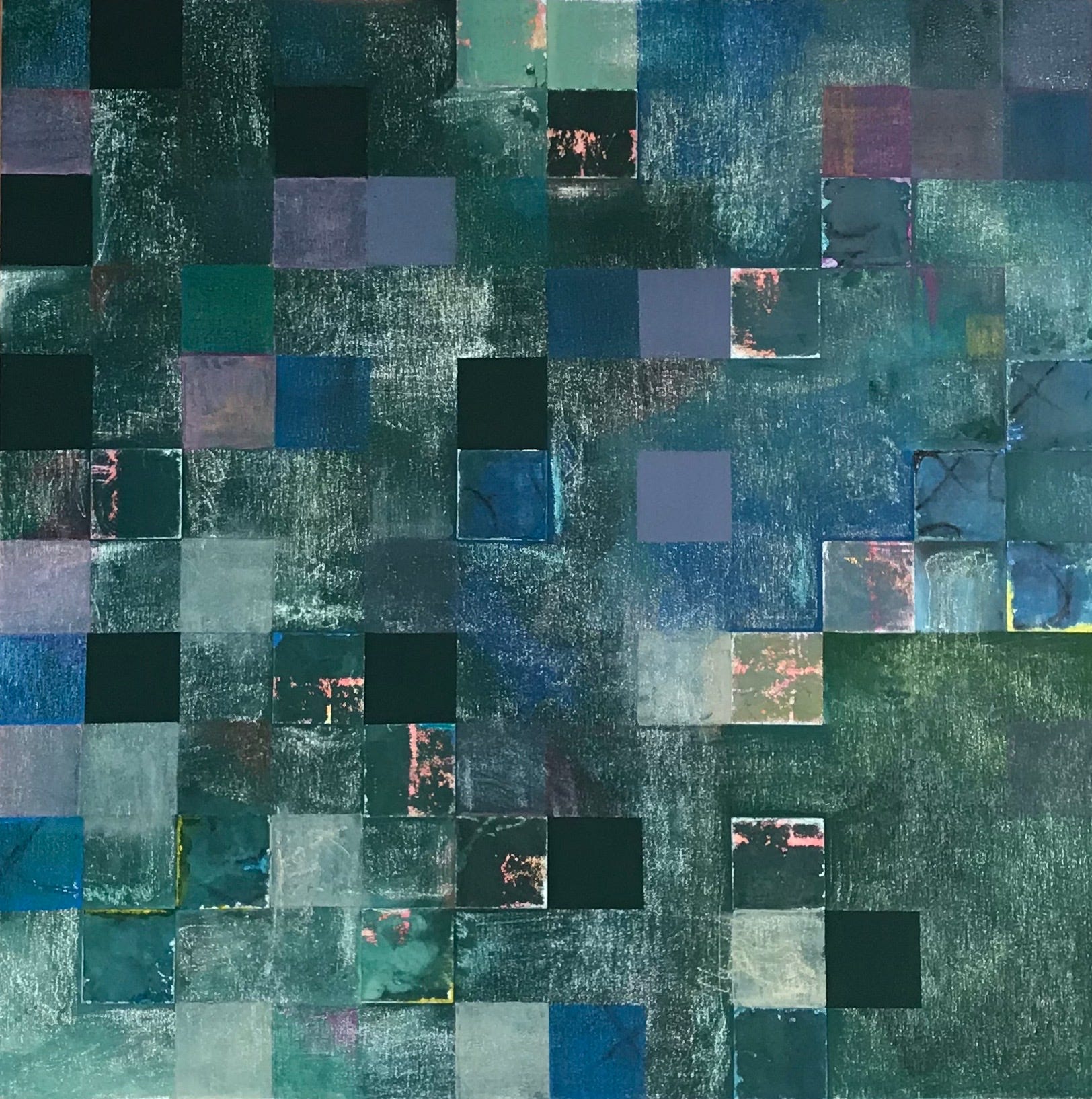
©2018, Suzanne Gibbs, Parent Sandwich. NFS
To me, grids can metaphorically stand for laws or cultural norms we live by. Laws are often rewritten or reinforced, while cultural norms hold strong and sometimes dissolve over time. Such change is normal and, at times, painful—even when the understanding of a law is molded anew, for whatever reason.
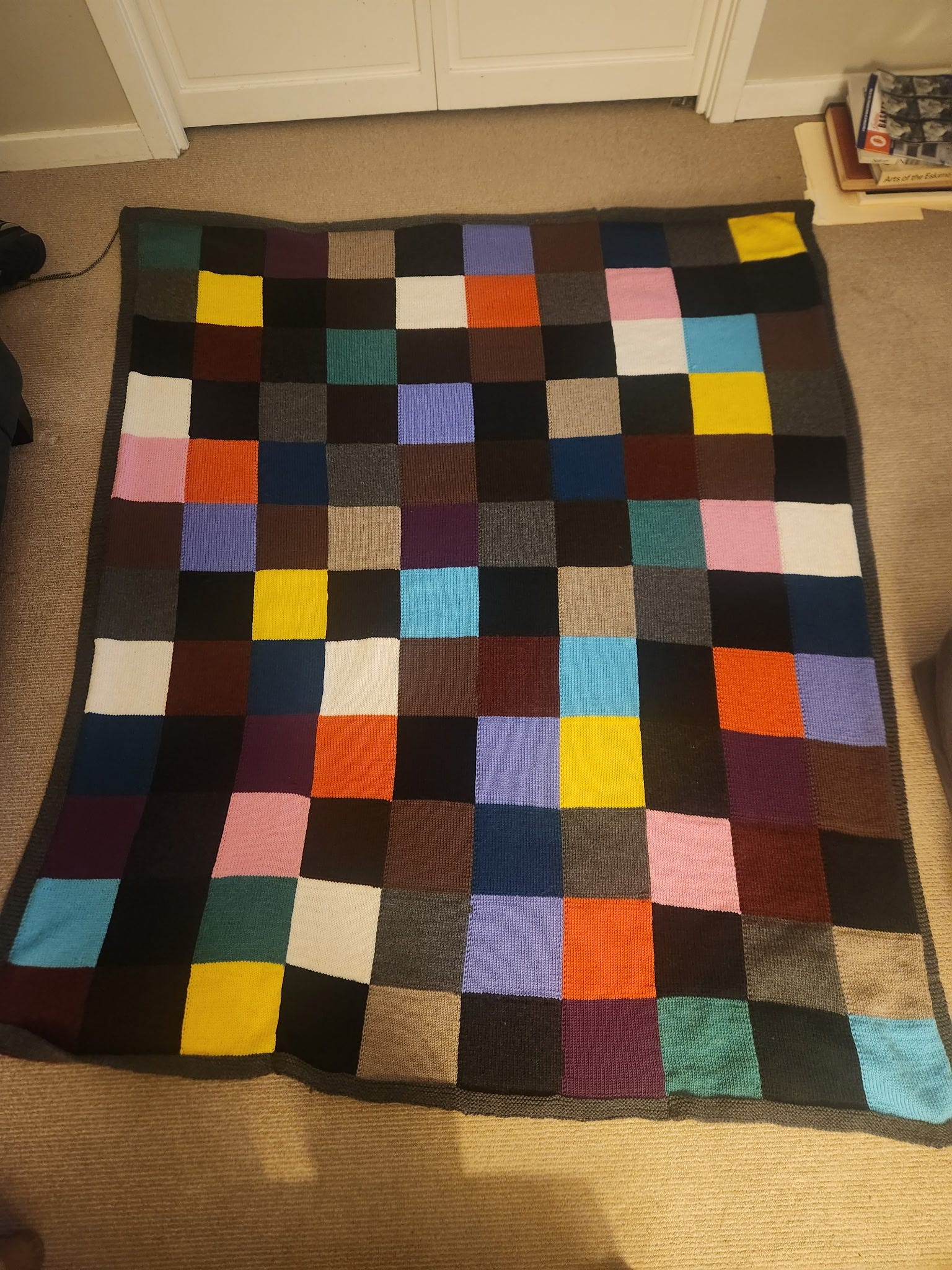
A gridded queen-sized blanket was recently made and gifted to her son by my neighbor. I watched her build the blanket square by square. Buoyant and joyful. Heavy and somber. This grid carries devotion, weight, and warmth.
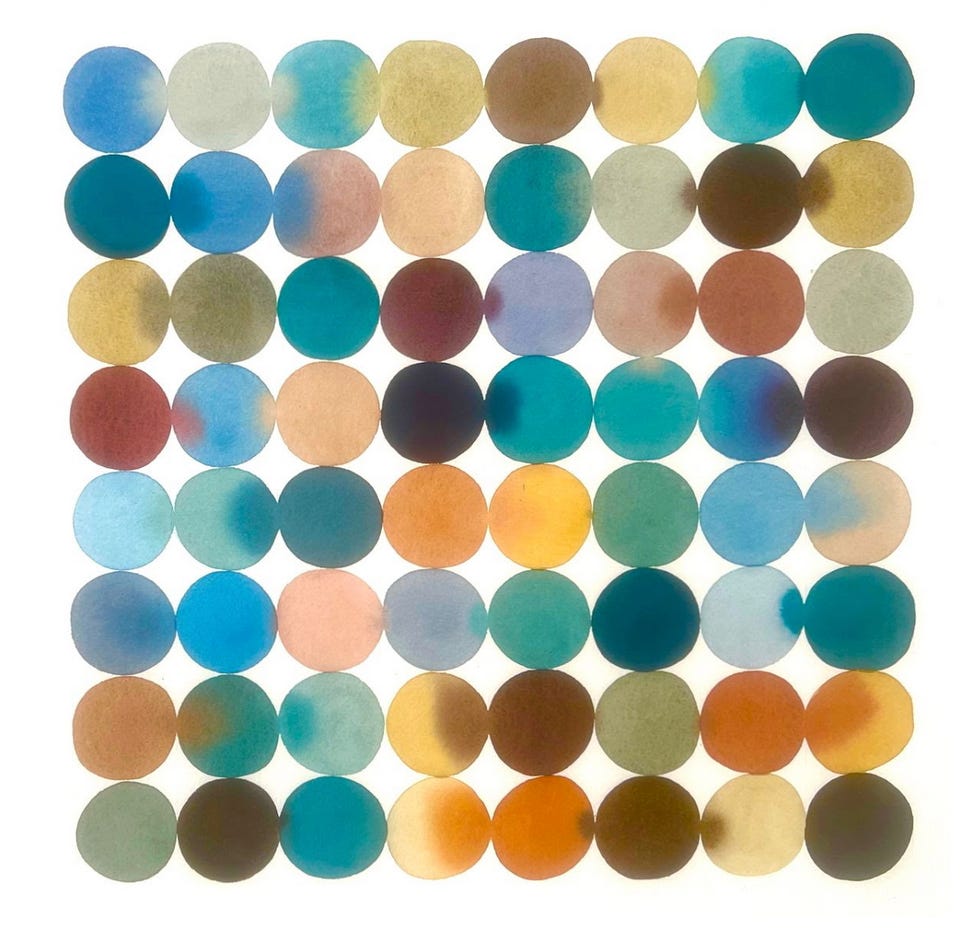
I captured the watercolor grid above as a screenshot. The terrible thing is that I forgot to capture the artist’s name. Shame on me. Artists and makers experience this kind of “stealing” and silencing all the time.
A reverse Google search did not yield a definitive answer, but the search did reveal how many artists paint watercolor grids. Now, similar work appears as inexpensive framed pieces in big box stores. Supporting individual artists would feel better. Still, I will dream.
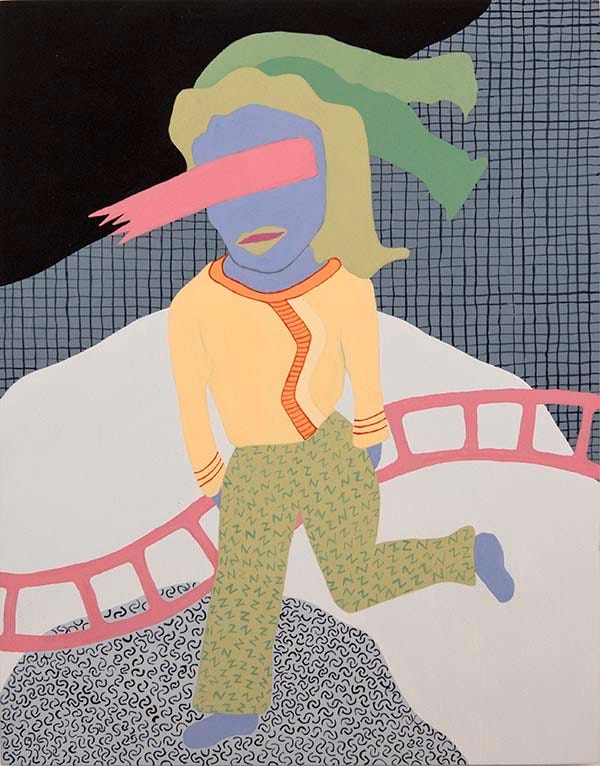
©2019, Suzanne Gibbs, See Nothing Keep Running. Available, inquire via email.
Grids promise stability. They suggest that things can be measured, aligned, and contained. But grids do not hold themselves—nor do ladders or ideas.
What I notice — in my studio and in the wider world — is how much we rely on structures that feel permanent. Systems of governance. Law. Economics. Culture. Religious norms. Family structures.
But what if none of it needs to be the same as always? What if everything or only something shifts?
Consider a court that asserts its role. A personal boundary as might clarified between two people. Civic leaders introducing new possibilities. All of life requires this same kind of attention. Not blind faith, but care and deliberate consideration.
What seems immovable rarely is. My willingness to examine the structure of a grid, again and again, helps me decide what to notice and reinforce within my own life—creatively and personally.
Artists everywhere return to the grid again and again. Not because of the rigidity of a grid, but because grids, when challenged and revered, reveal ideas and possibilities.
Agnes Martin painted grids as quiet devotion — lines that hum rather than shout.
Anni Albers built grids by hand, weaving structure into cloth, turning repetition into language.
Tansy Hargan creates luminous fields of repeated forms that feel both cellular and cosmic — disciplined and alive. The grid, in their hands, is not a cage. It is her personal inquiry.
I return to grids, as well.
The illusion is that a grid holds itself.
They do not.
Grids hold because we participate in them, visually, culturally, and civically.
And because of all of this and more, I remain fascinated by grids—both the stable and the shaky ones.
Sweet Antidote: A Sugar and Spice Society is where generosity meets art in conversation. A twice-monthly gathering on Zoom (and also offers a private online space for discussion) for artists who crave depth, honesty, and creative kinship.
SuzZeal is free — and will remain free.
Wednesdays belong to The Hermitess Papers — a serialized book, revealed one week at a time.
Paid subscribers receive new Hermitess installments each Wednesday.
If these newsletters make you think, smile, or feel a little less alone in your own creative messiness and missives, you can toss $5 or more into Suzanne’s hat—this is a one-time gift (not a subscription). It’s an internet version of wild audience applause, a virtual hug, or a dispatch to me: